Out of Andy SVG Design
A Designer’s First Look: Playful, Seasonal, and Surprisingly Versatile
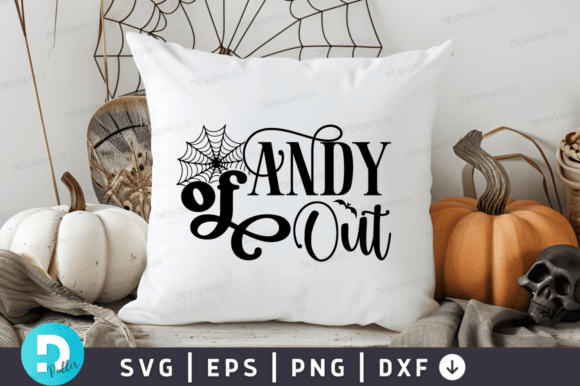
When I opened Out of Andy SVG Design for the first time, my eye went straight to its rhythm—not just the Halloween theme, but how the lettering flows with subtle bounce and uneven baseline alignment. It feels handmade without looking sloppy; like something a clever kid might scrawl on a pumpkin, then refined by a designer who knows how embroidery breathes. There’s no heavy gothic weight or overdone cartoon flair—just crisp, friendly letterforms with intentional spacing that suggests movement. That matters. A lot. Because when you translate this into stitch, every curve and gap becomes a decision point: Will satin stitch hold that thin serif? Does the negative space between letters stay legible at 3 inches wide on a tote bag? I immediately pictured it stitched onto a natural linen tea towel—soft fabric, warm thread, no glitter, just quiet holiday charm.
Where It Shines (and Where It Asks for Care)
Out of Andy SVG Design lands strongest in projects where personality outweighs precision. Think custom sweatshirt embroidery for a small-batch boutique, embroidered patches for local Halloween parade volunteers, or pillow covers for a nursery with seasonal rotation. Its visual weight holds up well on medium-to-heavy fabrics—cotton twill aprons, fleece-lined baby blankets, even structured canvas tote bags. On those surfaces, the design reads clearly from across a craft fair table. Customers pause, smile, and say, “Oh—I *get* that.” That kind of instant recognition is gold for Etsy sellers and handmade shop owners building trust through tone and timing.
But—and this is where experience kicks in—it’s not a one-size-fits-all embroidery file. On stretchy knit t-shirts? Proceed with caution. The open letterforms and slight irregularity mean stabilizer choice is non-negotiable: cutaway + tear-away combo, not just basic iron-on. On dark fabric, especially black or navy, test your thread contrast early—light gray or off-white works better than stark white for softness, and avoids that “glowing sticker” effect. And if you’re planning to use it on curved surfaces like caps or baby beanies, check whether the layout fits comfortably within standard hoop sizes *before* hooping. No need to force a 4.5-inch-wide design into a 4-inch hoop and risk distortion.
Real-World Use: A Tote Bag Test Run
Last week, I prepped Out of Andy SVG Design for a client’s limited-run embroidered tote—natural canvas, charcoal thread, minimalist branding. I ran three tests: one on scrap canvas with medium-weight stabilizer, one on a folded seam allowance (to mimic real bag construction), and one with slightly reduced stitch density to avoid stiffness. Result? Clean satin edges, readable lettering at 3.75 inches wide, and zero puckering. What surprised me was how well it aged visually after light washing—no fraying, no thread migration. That’s a win for any small business selling personalized gifts meant to last beyond October 31st.
That said, I’d skip using it for tiny baby onesies unless scaled down significantly—and even then, I’d verify every corner stitch clears the smallest needle eye on my machine. Tiny serifs and tight interior curves can snag or under-stitch on ultra-fine cotton. Same goes for layered garments: don’t place it directly over seams or pockets without adjusting placement and re-testing tension.
What This Means for Your Craft Business
As an embroidery designer and digital product reviewer, I look beyond aesthetics—I ask: Does this design *support* your brand, not distract from it? Out of Andy SVG Design does, when used intentionally. It adds warmth without clutter, seasonality without cliché, and approachability without sacrificing craft integrity. For Etsy sellers listing holiday embroidery files, pairing it with clean printable mockups (think flat-lay on a wooden table with dried orange slices and cinnamon sticks) boosts perceived value instantly. For apparel decorators, offering it as a “Halloween Capsule Collection” add-on—paired with simple bat or ghost motifs—creates upsell potential without extra design labor.
It also quietly signals professionalism. When customers see consistent stitch quality, thoughtful thread choice, and confident sizing on your finished product, they associate that care with *you*—not just the design. That builds repeat orders, word-of-mouth referrals, and long-term shop loyalty.
Practical Notes Every Embroiderer Should Check
- Test first—on scrap fabric matching your final project’s weight and texture.
- Review stitch density—especially in tight corners and letter interiors. Overly dense fill stitches can cause stiffness or thread breakage.
- Confirm hoop size compatibility—don’t assume it fits your most-used hoop without measuring the design dimensions.
- Inspect small details—zoom in on the SVG preview. Are there micro-gaps or overlapping paths that could confuse your embroidery software?
- Try black-and-white mockups—they reveal contrast issues faster than color previews.
- Use proper stabilizer—this isn’t a design that forgives lightweight or skipped stabilization.
- Verify licensing—since Out of Andy SVG Design is listed under Crafts and Graphics, confirm whether it’s cleared for commercial embroidery use or resale of finished items before listing on Etsy or at craft fairs.
Final Thought: A Thoughtful Tool, Not Just a Trend
Out of Andy SVG Design isn’t flashy—but it doesn’t need to be. In a market saturated with overdesigned Halloween graphics, its restraint is its strength. It works because it respects the craft: the way thread catches light, how fabric moves under needle, and how people actually connect with handmade products. Whether you’re stitching a single personalized gift or scaling production for a holiday collection, this design earns its place in your embroidery project toolkit—not as filler, but as a considered, reliable voice in your creative vocabulary.