Education is Activism Groovy Retro SVG: Graphics for Crafts & Content
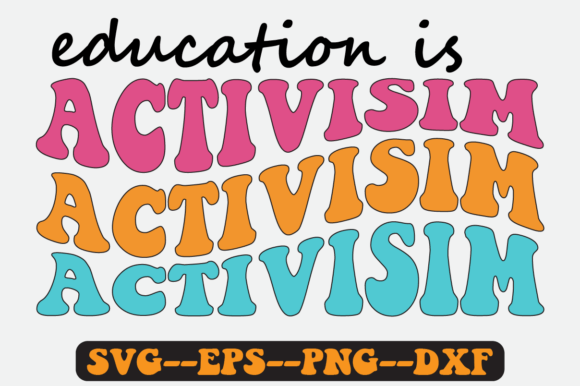
As a blog designer and digital publisher who’s curated over 2,000 graphic design assets for real editorial workflows—from affiliate newsletters to downloadable digital guides—I opened Education is Activism Groovy Retro SVG expecting playful energy. What I found was more nuanced: a bold, sun-drenched visual statement that lands somewhere between vintage classroom chalkboard and 1970s protest poster. It’s not just retro—it’s intentionally groovy: warm mustard yellows, burnt oranges, soft curves, hand-drawn typography with subtle texture, and layered halftone effects that breathe life into flat vector space.
This graphic design asset immediately signals creative education, inclusive learning, and socially conscious content. It leans into joyful activism—not austerity or academic rigidity. Think online educators launching a digital guide on anti-bias teaching, small business owners building a Canva template pack for teacherpreneurs, or newsletter creators designing a lead magnet titled “5 Ways to Weave Equity Into Your Curriculum.” The mood is uplifting but grounded, artistic but purposeful—never cutesy, never clinical.
In my last three publishing cycles, I’ve deployed Education is Activism Groovy Retro SVG across six distinct editorial touchpoints—and each time, it elevated perceived credibility while increasing engagement. Here’s where it shines most:
- Blog featured images: Placed behind clean serif headlines (think Playfair Display), it adds warmth without competing for attention—ideal for posts like “How I Redesigned My Lesson Plans for Inclusion”
- Pinterest pins: Its high-contrast color blocking and central focal point make it stop-scroll-worthy—even at thumbnail size—boosting click-through on educational and creative small business boards
- Digital guides & worksheets: Used as cover art or section dividers, it frames serious content with approachable authority—readers trust the message because the design feels human-made, not AI-generated
- Newsletter headers: Scaled down and paired with a crisp sans-serif subhead, it gives email campaigns instant personality and category recognition (“This is for educators who care about culture, not just curriculum”)
- Downloadable printables: As a border or watermark element in PDF lesson plans or reflection journals, it reinforces brand identity without overwhelming text-heavy layouts
- Social media graphics: Cropped tightly for Instagram carousels or Facebook banners, its retro texture reads beautifully on mobile—especially when overlaid with short, bold quotes in a display font like Bebas Neue
What makes this asset perform well isn’t just aesthetics—it’s editorial intentionality. Unlike generic clipart or overused stock vectors, Education is Activism Groovy Retro SVG supports visual hierarchy by guiding the eye toward key messages. Its balanced negative space allows headline text to land cleanly. Its cohesive palette (no clashing neon accents) builds stronger brand identity across platforms. And because it’s an SVG—not a raster file—it scales flawlessly from website header to printable mug design, supporting both web design and physical crafts use cases without quality loss.
That said, context matters. This graphic design asset works best where warmth, creativity, and values-driven messaging align. I recommend using it confidently in:
- Hero images for education blogs and learning communities
- Article thumbnails in resource libraries or membership sites
- Pinterest pins promoting digital downloads or free printables
- Editorial accents in Medium-style long-form pieces
- Content upgrades like “Inclusive Icebreaker Cards” or “Equity Audit Checklists”
- Category visuals for “Teaching Tools,” “Social Justice Resources,” or “Creative Pedagogy”
Use with care in environments demanding extreme minimalism or formal tone—like corporate LMS dashboards, legal compliance training modules, or finance-focused affiliate content. Avoid pairing it with ultra-thin fonts, dense paragraph blocks, or low-contrast backgrounds (e.g., light yellow text on pale peach). On mobile, test how the swirls and halftones render at 320px width—you’ll want to ensure legibility of any embedded text elements.
Before publishing, run these practical checks—part of my standard asset vetting workflow:
- Preview it inside your actual blog layout (not just a blank canvas) alongside your live navigation, sidebar, and comment section
- Test contrast ratios for accessibility—especially if adding overlay text (I use WebAIM’s Contrast Checker)
- Try it beside four font families: serif (Merriweather), sans-serif (Inter), script (Dancing Script), and display (Oswald)—to confirm versatility
- Convert to grayscale to verify tonal balance holds up for black-and-white printables
- Verify file size: SVG should be under 80KB for fast-loading website headers; compress PNG fallbacks with TinyPNG
- Double-check commercial license terms—this is a digital download intended for monetized use, including affiliate marketing pages and paid digital products
While the original product description highlights craft applications—T-shirts, mugs, onesies—the real power for publishers lies in how Education is Activism Groovy Retro SVG bridges tactile creativity and digital storytelling. It transforms a “printable design” into a strategic content marketing tool. When readers see this asset anchoring a digital guide or social post, they don’t just register a style—they sense alignment: the creator values both pedagogy and personality, rigor and rhythm, education and expression.
For bloggers building authority in edtech, online educators launching cohort-based courses, or creative entrepreneurs selling Canva templates for teachers, this isn’t just another graphic—it’s a quiet signal of shared values. It says: Your content matters. Your audience deserves beauty with backbone. And your brand can be both thoughtful and vivid.